This article may contain affiliate links. If you buy through them, Everyday Nesting may earn a small commission at no extra cost to you. Learn more.
For a long time my plants were spread out one per surface, a pothos here, a snake plant there, each one on its own side table like they had been placed by someone drawing straws. It looked fine individually and scattered as a whole, and I could not figure out why other people’s plant corners felt so much more settled than mine until I started paying attention to how those plants were actually grouped.
The first attempt was purely visual
My first fix was aesthetic only, I pulled three plants of different heights onto one shelf because I had read that varying heights makes a grouping look more intentional. It did look better for about a week. Then I noticed the trailing pothos I had put at the back, thinking it would cascade nicely over the edge, was getting noticeably less light than it had on its old windowsill, and it started stretching toward the gap between the other two pots instead of trailing down the way I wanted.
That was the moment I realized grouping by looks alone was setting up the same mismatch problem as buying by looks alone. A plant does not care how the cluster reads from the couch, it cares whether it can still reach the light it needs from wherever I put it in that cluster.
Grouping by actual need instead
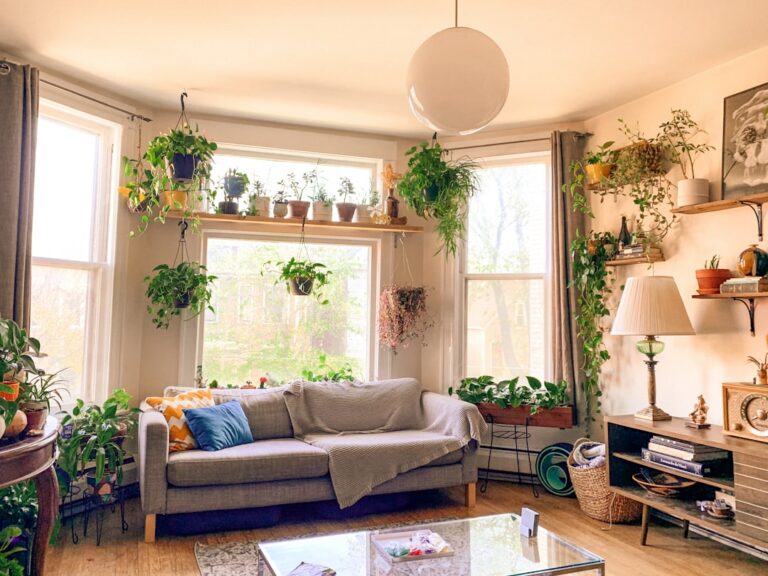
The version that has actually held together groups plants that want similar conditions, then lets the visual arrangement follow from that instead of leading it. The windowsill cluster is all plants that want bright, consistent light, arranged with the tallest hanging back a few inches so it does not shade the shorter ones in front. The hallway grouping is the opposite end, plants that tolerate low light and infrequent water sitting together where nothing about the spot is going to change day to day.
- Window cluster: pothos and philodendron, both wanting bright indirect light and a similar watering interval
- Hallway cluster: snake plant and ZZ plant, both fine with low light and long gaps between watering
- Kitchen shelf: a second, smaller pothos on its own, since the light there is brighter than the hallway but not as strong as the main window
Once grouped this way, watering became simpler too, since I am not checking four completely different schedules scattered across four completely different corners, I am checking two or three small groups that mostly move together.
Height and shape came after, not first
The plants that need the same things end up near each other. The way they look together is what happens next, not what I plan first.
Within a group that shares light and water needs, I do still think about height and leaf shape, since a cluster of same-sized round leaves reads as flatter and less interesting than a mix of trailing vines, upright leaves, and something with a bit of texture. But that layer of thinking only happens after the care-based grouping is settled, because a beautiful arrangement that fights the plants’ actual needs falls apart within a month, the way my first shelf attempt did.
Leaving room to breathe
The other adjustment was spacing. My instinct was to push pots close together so the cluster read as one solid shape rather than several separate plants, but that crowding held moisture around the leaves longer after watering, and I noticed a little more leaf spotting on the plants in the middle of a tight group compared to ones with a couple of inches of air around them. Now I leave enough gap between pots that I can see a sliver of shelf or windowsill between most of them, which turned out to look more deliberate anyway, less like a huddle and more like a considered arrangement.
What actually changed
The living room corner did not get any new furniture and I did not buy more plants to fill it out. I just stopped treating each pot as an island and started letting the ones with matching needs sit near each other, with the visual pattern built on top of that instead of instead of it. It reads as a collection now instead of a scatter, and it has also made the actual care simpler, since two or three grouped check ins have replaced four separate ones.