This article may contain affiliate links. If you buy through them, Everyday Nesting may earn a small commission at no extra cost to you. Learn more.
For years I judged sheets almost entirely by thread count, on the assumption that a higher number simply meant better sheets. It took buying a very high thread count set that still felt oddly warm and slightly heavy, even in a warmer month, to realize thread count was telling me much less than I thought it was.
What actually mattered, once I started paying attention, was the weave, specifically whether the sheets were percale or sateen, and the fiber they were made from. Those two things together explained almost everything about how a set of sheets felt and behaved, in a way the number on the packaging never did.
Percale Versus Sateen Is the Real Question
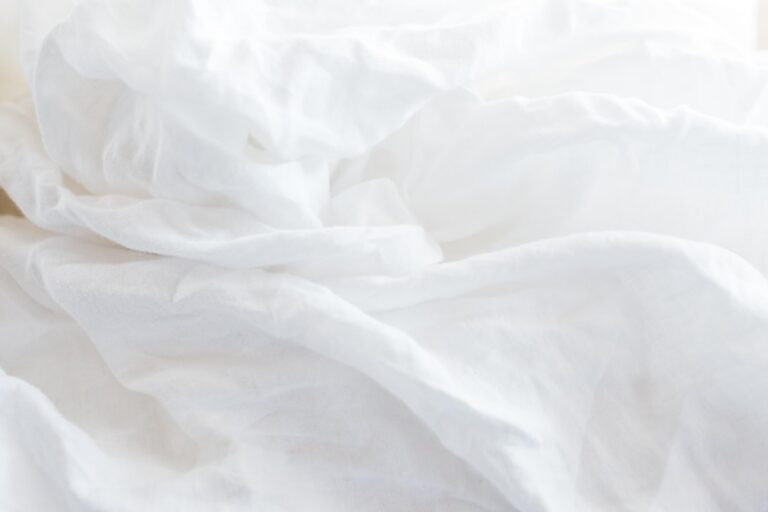
Percale sheets use a simple over-under weave, the same basic structure as a plain woven shirt fabric, which produces a crisp, matte surface with a lot of breathability. My percale set, once I finally bought one, felt cool against the skin almost immediately, and stayed that way through the night rather than warming up the way some other sheets had. The tradeoff is that percale can feel a bit stiff and papery when it is new, something that only softened after several washes.
Sateen sheets use a different weave, with more threads running in one direction floating over the surface, which produces the smoother, slightly glossy feel a lot of higher-end sheets are known for. Sateen felt noticeably warmer against the skin than percale, and slightly heavier in hand even at a similar thread count. Once I understood that difference, my earlier confusion about a high thread count set feeling too warm made complete sense. It had been a sateen weave, not a percale one, and the warmth had nothing to do with the number printed on the packaging.
Comparing two sets with a similar thread count but different weaves was the moment thread count stopped meaning much of anything to me on its own.
Fiber Changed Things Again
Cotton percale and linen behave differently even though both are known for being breathable. Linen sheets, once I tried a set, felt more textured against the skin and wrinkled far more than cotton, but also seemed to regulate temperature in a way that felt distinct, cool in warm months without feeling clammy the way some synthetic blends did in the same weather. Linen took longer to feel soft, closer to a handful of washes rather than one or two, and the wrinkled look never fully went away, which I eventually stopped minding and started associating with the fabric rather than seeing as a flaw.
A cotton and polyester blend set, bought mostly because it was inexpensive and marketed as wrinkle resistant, did resist wrinkles as promised but also trapped heat more than either the cotton percale or the linen. It became the set I used only in colder months, once I had sorted my bedding by season rather than assuming one set could handle the whole year.
Building an Actual Seasonal Rotation
Once the weave and fiber differences were clear, building a rotation became fairly simple. Percale cotton and linen went into use for warmer months, when breathability mattered more than warmth. The heavier sateen set and the cotton-polyester blend moved into colder months, when a bit of trapped warmth was welcome rather than uncomfortable.
Switching sheets by season also changed how I thought about blankets on the bed. With a warmer sheet already doing some of the work in winter, I did not need as heavy a comforter as I had been using, and in summer, with a cooler percale sheet underneath, a single light blanket was enough where I used to need almost nothing at all just to avoid overheating.
Weight in Grams Told Me Less Than the Weave Did
I also spent a while comparing sheets by fabric weight, assuming a heavier weight would always mean a warmer sheet, the same mistake I had already made once with thread count. That did not hold up either. A heavier percale sheet still felt cooler through the night than a lighter sateen one, because the weave was doing more of the temperature work than the weight of the fabric itself. Weight seemed to matter mostly for how substantial a sheet felt in hand while making the bed, not for how it actually performed once someone was sleeping under it for eight hours.
What I Check on a Sheet Label Now
- Weave type first, percale or sateen, before looking at thread count at all
- Fiber content, since cotton, linen, and blends each regulate temperature differently
- Whether the set is being bought for a warm season or a cold one, rather than assuming one set covers both
- How many washes a fabric typically needs before it softens, so a stiff first impression is not mistaken for a bad purchase
The high thread count set that started all of this is still in the closet, reserved now for the coldest months when its warmth is finally an advantage instead of a problem. It was never a bad set of sheets. It was just the wrong season, and thread count alone was never going to tell me that.