This article may contain affiliate links. If you buy through them, Everyday Nesting may earn a small commission at no extra cost to you. Learn more.
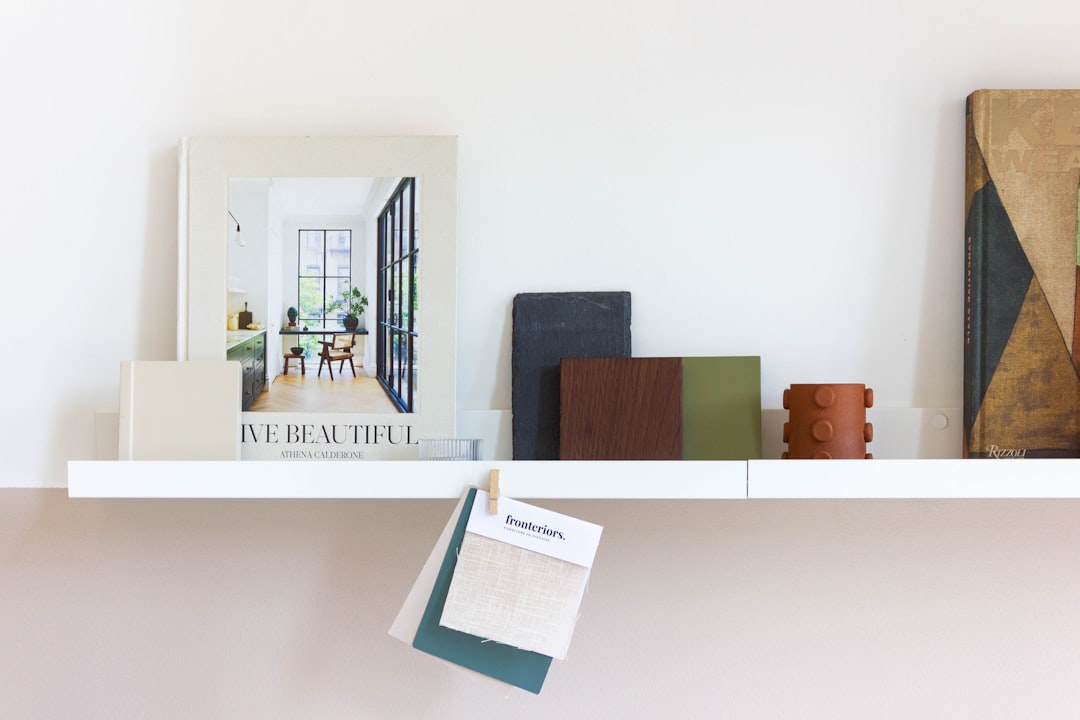
I noticed the sag before I noticed the cause. My floating shelf in the living room, the one holding most of my hardcover art books, had developed a visible dip toward the left side. Not dramatic, maybe a quarter inch, but enough that a marble I rolled across it for fun (do not ask) picked up speed and fell off the end. I assumed the bracket was failing. It was not. I had simply put every heavy object on one half of the shelf and left the other half almost empty.
How I Actually Diagnosed It
I pulled everything off and weighed the two halves against each other by hand, which is not scientific but told me what I needed to know immediately. The left side had four large hardcovers, a ceramic vase, and a stack of magazines. The right side had one small framed photo and a candle. The imbalance was obvious once the shelf was empty and I could see how unevenly I had loaded it in the first place. I had built the arrangement purely by what looked good from the couch, never once thinking about where the weight was actually landing along the length of the board.
The bracket spacing matters more than I assumed
My shelf has two brackets, one about eight inches from each end, on a five foot span. That left a long stretch in the middle with no support directly underneath it. Heavy items sitting near the center of that unsupported span put more strain on the whole assembly than the same items sitting directly over a bracket. Once I understood that, the fix was less about total weight and more about where along the shelf the weight actually sat.
What I Changed
- Moved the heaviest books so their spines sit roughly above or just inside the bracket points, not in the open middle span
- Split the four hardcovers into two pairs, one near each end, instead of stacking all four together
- Added a second small object to the previously empty right side so both ends carry a closer amount of visual and actual weight
- Left the center of the shelf lighter, with just the candle and a small dish, since that is the section with the least support underneath
Testing Before I Trust a Shelf Again
Now when I load a new shelf, I do a rough check before I commit to an arrangement. I press down gently at the center point between the brackets and see how much give there is compared to pressing near a bracket itself. If the center flexes noticeably more, I know that section needs to stay lighter, and I plan the heavier objects around the support points instead of wherever they happen to look best in the moment.
I also stopped stacking all my heaviest books in one tower. It looks nice in photos, a single tall column of hardcovers, but it concentrates a lot of weight into a few square inches of shelf. Spreading the same books into two shorter stacks a couple feet apart does almost as much visually and asks much less of any single point on the board.
The sag did not happen because the shelf was cheap. It happened because I never thought about the shelf as a structure, only as a surface.
The Kitchen Shelves Taught Me the Same Lesson Twice
I have a set of open shelves in the kitchen holding stoneware plates and a few mixing bowls, and I made almost the identical mistake there before I had learned anything from the living room shelf. All the dinner plates went on one shelf, stacked six deep, while the shelf above held nothing but a few mugs. That top-heavy stack of plates sat directly over a single bracket instead of spread across the span, and I could feel the shelf flex slightly whenever I pulled a plate from partway down the stack. I split the plates into two shorter stacks on either side of the shelf and moved a couple of the heavier bowls down to a lower shelf entirely, closer to the counter, which also happens to be easier to reach for the dishes I use most.
What I Look At Now Before Anything Goes Up
Before I place anything heavier than a paperback, I look for where the brackets or the wall anchors actually sit and I try to keep the heaviest objects roughly over those points rather than centered in whatever gap looks most open. It is a small habit that took me two sagging shelves to build, but it has held up since. The shelf still looks the way I want it to look. It just does not sag anymore, and that quarter inch dip has not come back on either the living room shelf or the kitchen ones since I redistributed everything.