This article may contain affiliate links. If you buy through them, Everyday Nesting may earn a small commission at no extra cost to you. Learn more.
The smallest room in this apartment has one window, and that window faces a brick wall roughly eight feet away, which belongs to the building next door. At no point in the day does direct sunlight reach that window. On a bright afternoon the room gets a weak, gray sort of daylight, and on an overcast day it barely registers at all. For the first several months we lived here, that room functioned as a place to put boxes we had not unpacked yet, mostly because it felt too dim to use for anything else.
My first attempt at fixing this was a single ceiling fixture with a bright bulb, the brightest one the fixture would take. It solved the darkness problem in the most brute-force way possible, and it also made the room feel like an interrogation room, one flat pool of harsh light with nowhere for your eyes to rest. I lasted about two weeks working at a desk in there before I admitted it was unpleasant to sit in for long, even though it was, technically, no longer dark.
The second attempt, and why it also failed
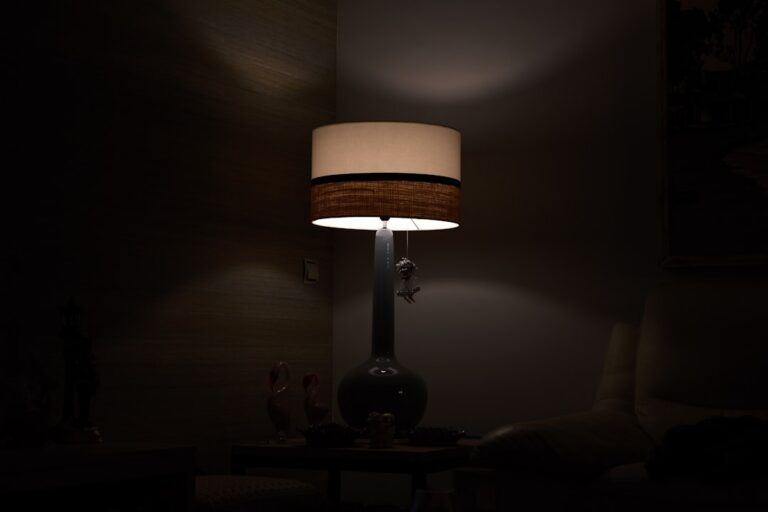
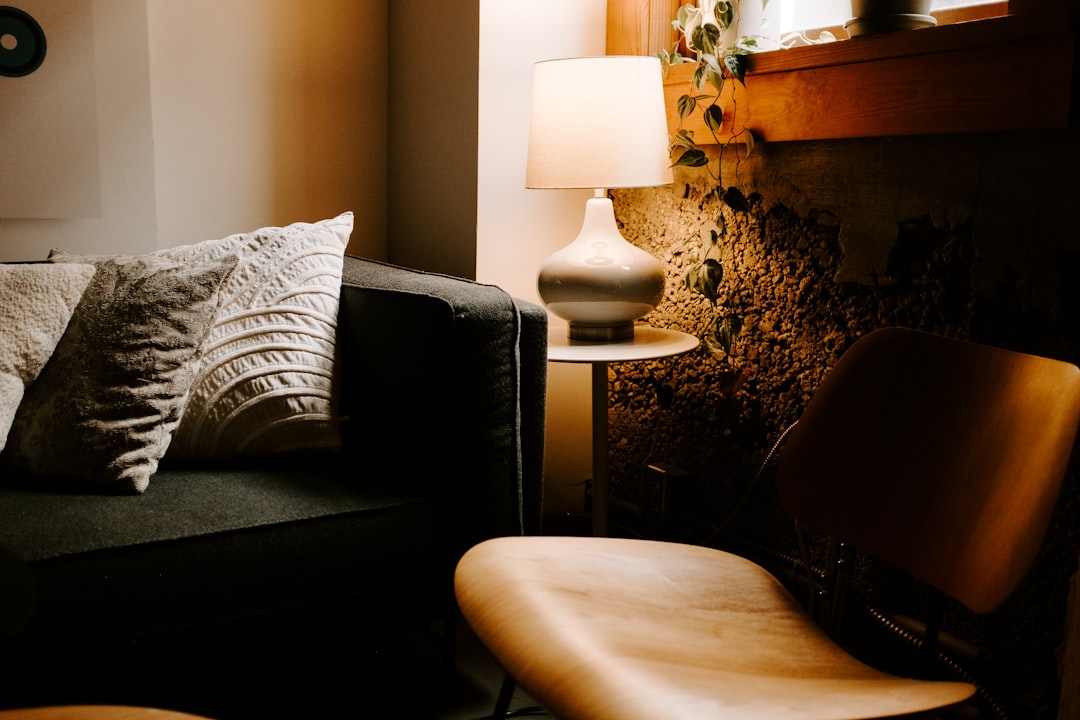
My second try was closer to what I now do in every other room, layered lamps instead of one overhead source. I put a floor lamp in one corner and a desk lamp on the actual desk. This was better, but something was still off, and it took me a while to figure out what. The room had no natural light acting as a baseline at any point in the day, so even with two lamps on, the space still read as artificially lit rather than genuinely bright. Every other room in the apartment gets natural light for part of the day, which sets an expectation your eyes carry with them even into a lamp-lit evening. This room never gets that baseline, so it needed to work harder than the others to feel comfortable rather than merely lit.
A room with zero daylight has to earn its brightness in a way rooms with even weak daylight never have to.
What actually worked
The setup that finally worked involved three separate light sources instead of two, plus a change to the walls themselves. I added a small uplight behind a low bookshelf, aimed at the ceiling and the wall behind it, which spreads a soft wash of reflected light across the upper part of the room rather than concentrating everything at desk height. Combined with the floor lamp and desk lamp already there, the room now has light coming from three different heights and directions instead of one, which does a surprising amount to make a windowless-feeling room seem less like a box.
The other change was repainting that room a lighter color than it had been. It was a pale gray before, which I had assumed was neutral enough to work anywhere, but in a room with almost no daylight, pale gray read as dim and slightly cold no matter how many lamps I added. Switching to a warmer off-white bounced the lamp light around the room far more effectively, since a lighter, warmer surface reflects more of the light that hits it rather than absorbing it. I did not expect the wall color to matter as much as the lamps, but in a room like this one, it turned out to matter just as much.
A note on bulb choice specifically for a room like this
I also went warmer on all three bulbs in that room than I would in a room that gets real daylight during part of the day. A cooler bulb, the kind that mimics daylight, felt strange in a room with no actual daylight to match it against, almost like an imitation of something the room could never really have. A warm bulb reads instead as its own kind of light, honest about being lamp light rather than trying and failing to be daylight.
What I would try first in a similarly dark room
If I were starting over in another room like this one, I would begin with the wall color rather than the lamps, since a dark or cool-toned wall will undercut even a good lighting setup before you have spent a dollar on a bulb. From there, I would plan for at least three light sources at different heights rather than one or two, because a single source in a room with no daylight baseline has to work far harder than it can manage on its own.
The room still is not bright in any absolute sense. It will never get real sun, and no lamp changes that fact. But it no longer feels like a room being punished for its window, and that turned out to be the more realistic goal all along.